

Beyond Sulong Tayo!’s Rebranding
PART TWO: Different Package, Same Problem
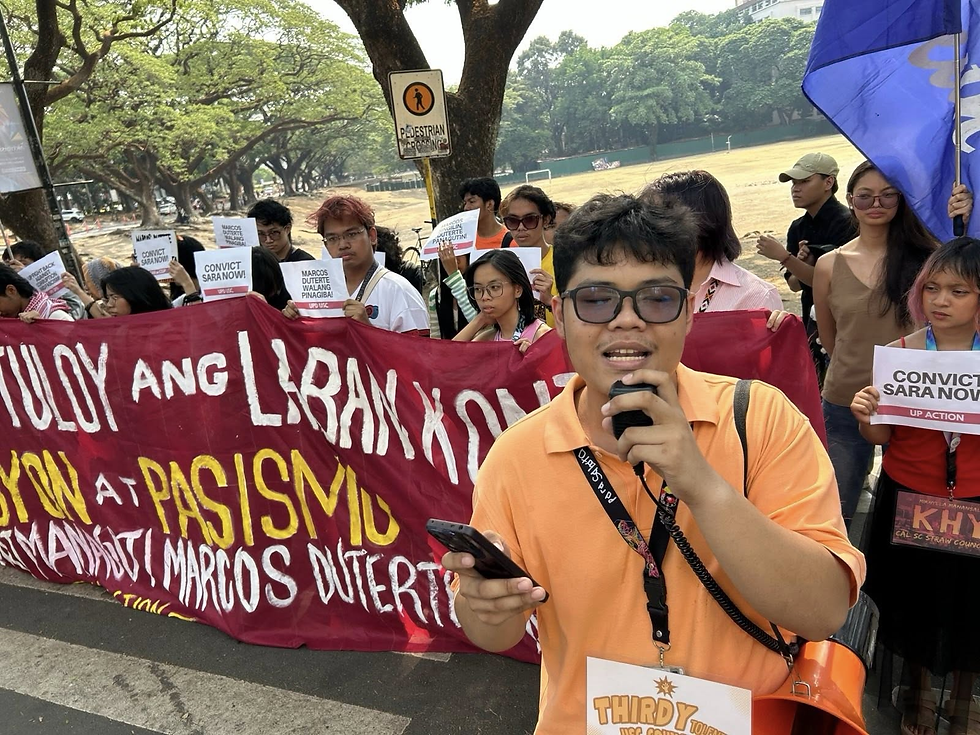
Sulong Tayo! presents itself as a fresh start, a coalition of independent students finally breaking free from old labels. But the pattern we have traced—from STAND UP's 2023 admissions of systemic sexual harassment, to the USC's catastrophic mishandling of the Jobert Pillas rape case, to the steady rebranding from Laban Kabataan to Sulong Tayo!—tells us that it is more than mere political spin.
This is not just about one coalition avoiding accountability. This is about a systemic culture of abuse, secrecy, and organizational protectionism that critics and former rebels alike say runs through the broader national democratic (NatDem) movement—from aboveground activist formations such as Kabataan Partylist, Panday Sining and Anakbayan (which are the convenors of STAND UP and Sulong Tayo!), and all the way to the underground structures of the CPP-NPA-NDFP.
The silence that greeted the sexual assault allegations against a Kabataan Partylist leader in 2025 was not an anomaly. According to revelations of former cadres of the CPP-NPA-NDFP, the response followed a “playbook long practiced by the underground movement,” in which sexual abuse allegations are often handled internally through “criticism and self-criticism” or “rectification” processes designed more to preserve the organization than to deliver justice for victims.
The survivor, herself a former Kabataan member, only came forward publicly after allegedly being failed by the organization’s internal mechanisms. The partylist’s initial response was to insist that the matter was being handled “internally” and to offer assistance in filing a case. The move was described by critics as an attempt to preserve institutional image while avoiding deeper accountability.
Even after Kabataan Partylist eventually expelled the accused member, public outcry forced the organization to admit its own failures and acknowledged that its support to the survivor “was insufficient” and that delays in proceedings “may have caused further harm.” The group apologized for these “shortcomings” and committed to reviewing its internal mechanisms.
However, this broader pattern remained painfully familiar to many former activists and ex-cadres.
Pol over per
To former rebels who were recruited to these same national democratic organizations during their college days, the culture of suppressing politically damaging information does not begin inside student councils. They say that it reflects a much older political culture embedded within the CPP-NPA-NDFP itself, one where organizational preservation, secrecy, and internal discipline are treated as political necessities.
Many outside the movement often ask: Why would survivors who passionately advocate for women’s rights, accountability, and social justice allow themselves to remain silent when abuse happens inside their own ranks?
Former rebels say the answer lies in the political culture activists are gradually entrenched into once absorbed deeper into the movement.
As a Natdem activist, especially once recruited into underground work, and even more so once accepted as a Party member, you are conditioned to prioritize the welfare of the organization above your own personal welfare. Organizational discipline becomes inseparable from political morality. Internal criticism is tolerated only so long as it does not threaten the broader movement.
The CPP itself says as much in its Party pledge, where members vow “...to keep high the integrity and prestige of the Party, to safeguard the security of the Party and all my comrades at the cost of my life if necessary…”
Former cadres say this principle of “politics over personal (pol over per)” does not remain confined to armed guerrilla units in the countryside. It influences the broader activist ecosystem surrounding and supporting the armed movement, including legal mass organizations, student formations, and campus political coalitions.
This is why the pattern seen in the STAND UP scandals and the Pillas controversy felt disturbingly familiar to many former members of the movement. The instinct to protect the organization first. The reflex to suppress politically damaging information. The pressure to subordinate personal grievance to collective survival. The belief that exposing internal problems strengthens the “enemy.” And above all, the culture of secrecy.
Because secrecy and compartmentalization are treated as essential for organizational survival. Information is distributed strictly on a need-to-know basis. Public denial becomes routine even when realities on the ground appear obvious, contradictory, or openly visible.
This is why, according to former rebels, links to underground revolutionary structures are almost always denied publicly regardless of how visible the overlaps may appear to outsiders.
Even in protest actions where organizations allied with STAND UP openly wave communist symbols and revolutionary flags, formal organizational ties to the CPP-NPA are still categorically denied. To critics, the contradiction appears absurd. To former underground members, however, this reflects a long-standing operational culture where plausible deniability is politically necessary.
Campus Activism to Armed Struggle

And this is precisely why critics argue the issue goes far beyond mere campus politics.
The mass organizations that form the backbone of Sulong Tayo!—Kabataan Partylist, Anakbayan, League of Filipino Students, Gabriela Youth, College Editors Guild of the Philippines to name a few—are not merely campus activist groups. Former rebels have repeatedly attested that these organizations function as legal and recruitment mechanisms linked to the broader CPP-NPA-NDFP movement.
A former Anakbayan chapter chair, recruited at age 14 who later became a Kabataan Partylist officer before eventually joining an NPA unit in Luzon. Over the years, former rebels have testified that they were recruited “first, as activists” through legal mass organizations before eventually becoming underground cadres or armed fighters. Senate hearings, public testimonies, and interviews with former members have repeatedly described how some students were gradually funneled from campus activism into clandestine organizing, rural integration work, and eventually armed struggle itself. Parents of students recruited into armed groups have themselves protested outside UP Diliman in past years, accusing activist organizations of drawing students into the armed movement.
None of this means that every activist or every member of a national democratic organization is automatically an armed insurgent. Many are not; many more escape the recruitment into underground organizations. But former rebels consistently argue that these organizations historically served as ideological, organizational, and recruitment spaces where some students were eventually drawn deeper into underground revolutionary work.
Fallen (armed) members
Sulong Tayo! asks us to believe they are something entirely new. But their mass organizations have repeatedly produced activists who later surfaced as underground cadres, captured operatives, surrenderers, or armed combatants.
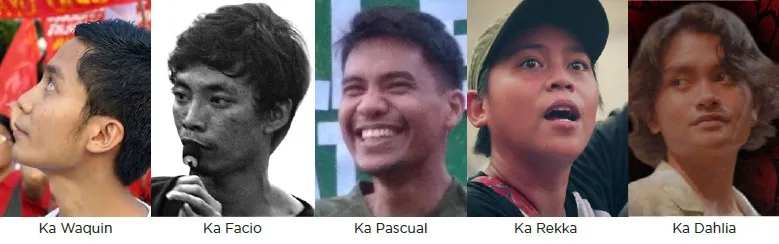
Even former UP Diliman Chancellor Michael Tan acknowledged this uncomfortable reality in a Philippine Daily Inquirer column following the death of former UP student activist Wendell Gumban in an encounter in Davao de Oro in July 2016.
“In the 21st century, it is rare to hear of UP students or graduates joining the NPA,” Tan wrote. “But it does happen, and when I do get news of someone from UP being killed in an encounter, I pause and reflect, wondering why UP students join the NPA; or, for that matter, why we continue to have an armed insurgency.”
Wendell Gumban’s story reflected the same trajectory critics of the NATDEM movement have long pointed to. He was active in UP Diliman through the Philippine Collegian, where he became news editor and later managing editor in 2006. He was also associated with the League of Filipino Students (LFS). Years later, he was killed in an armed encounter in Davao de Oro as part of an NPA unit.

And Gumban was not an isolated case. Chad Booc, a former member of STAND UP and a known youth activist, was killed during a military operation in Davao de Oro in February 2022. Christine Puche, a former member of the College Editors Guild of the Philippines (CEGP), was killed in an encounter in July 2013. Kaliska Dominica Peralta, another former STAND UP-linked activist from the UP College of Mass Communication, who had served in the candidates management committee of STAND UP-CMC in 2009, was also killed in Bukidnon in April 2024. These were not random individuals disconnected from campus activism. They emerged from the same activist organizations and political networks now backing Sulong Tayo!.

One of the most controversial recent examples was former USC councilor Alyssa Alano. Before her death, Alano served as Education and Research Councilor of the UP Diliman USC and was publicly associated with the League of Filipino Students. When she was killed during an encounter involving NPA fighters in Negros Occidental in April, the USC mourned her as an “innocent civilian.” The CPP later identified her as one of the fallen alongside its NPA members, although it denied that Alano was an armed fighter herself.
These incidents reinforce long-standing allegations that some national democratic activists eventually transition into underground revolutionary work and armed struggle. Supporters, meanwhile, argue such narratives are weaponized to justify state harassment of activists and progressive organizations.
Contentious, but revealing
The debate remains deeply contentious. But this is precisely what makes Sulong Tayo!’s attempt to present itself as merely an “independent” coalition increasingly revealing and difficult to sustain.
Because this is no longer simply about one mishandled rape case or one student council controversy. This is about an entire political ecosystem that former rebels, who once belonged to it, say has normalized secrecy, organizational protectionism, suppression of internal accountability, and the gradual radicalization of students into underground revolutionary work.
We call out Sulong Tayo! not because we oppose student activism, not because we reject calls for genuine social change, and not because we are blind to the very real injustices in Philippine society.
We call them out because progressive ideals do not justify protecting abusers, suppressing accountability, or romanticizing the participation of young students in armed violence while hiding the realities and risks of where that political path can lead. And we call them out because the same organizations that quietly honor fallen NPA fighters as “martyrs” within movement circles often publicly deny or downplay those links when scrutiny intensifies—a contradiction rooted in a political culture of secrecy, compartmentalization, and plausible deniability.
The struggle for national sovereignty and social justice does not require people to look away when young women are allegedly silenced for the sake of “the movement.” The fight against militarization and inequality does not obligate anyone to romanticize organizations accused by former members themselves of exploiting, radicalizing, and sacrificing the youth.
Sulong Tayo! wants UP students to believe that changing coalition names is enough to sever years of political baggage. But rebranding does not erase institutional memory. Sulong Tayo! is the same problem, repackaged.


Mga Komento