

What’s happening in Negros?

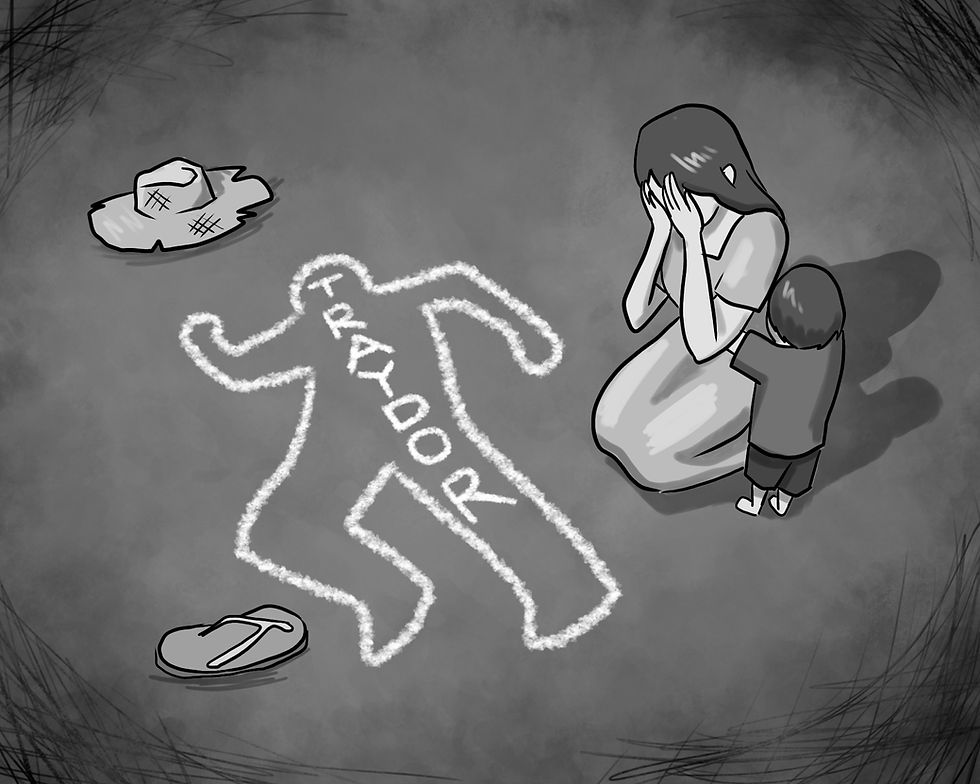
As of February 8, 2026, community-validated data document 27 individuals killed in a series of liquidation-style incidents across Negros Island Region. Of these, 25 are men and 2 are women. Almost all were branded “suspected informants.” All were summarily executed.
This list spans from early 2025 to February 2026. Farmers, laborers, barangay officials. A tricycle driver, a dried fish vendor, a former CAFGU. Of the 27, only one is a former rebel commander of the New People’s Army who had surrendered and returned to civilian life.
The killings are not random violence but systematic, claimed by the Communist Party of the Philippines and NPA’s vigilante-style summary execution. Their alleged offense? Being “suspected informants.”
The victims? Their profile is telling. Most are rural poor. Farmers and laborers dominate the list. Some were local officials — kagawads, tanods, IP representatives. Some were affiliated with local peace groups. To be sure, the majority of them had, at one point in their lives, been supportive of the CPP-NPA’s people’s war but have since chosen to pursue a different path to achieving social justice, peace and development.
In most cases, the pattern of killings suggests what the propaganda writers of the CPA-NPA themselves describe as “cleaning operations,” or removing those perceived to have shifted allegiance to the government. In at least one documented case, the killing was justified as a “death penalty” meant to warn others against aiding government forces. This language mirrors the logic of revolutionary justice, stripped of safeguards, and functions as coercion.
But it must be made plain that all of them were not killed in armed encounters. They were not active combatants. They cannot even be called hors de combat, since in no way do they participate in armed hostilities. They were merely labeled, and then eliminated.
“Suspected informant” has become a death sentence in certain rural areas. No public trial, no evidence that the accused can contest, and no verifiable due process. The CPP-NPA acts as absolute judge, jury, and executioner. And the public is expected to accept its verdicts as legitimate, as though the organization has no history of purges or unjustified civilian killings.
While the social conditions that have for decades made Negros fertile ground for insurgency remain unresolved, what is happening in Negros is more specific, and more troubling. It reflects how the so-called Third Rectification of the CPP-NPA-NDFP is actually unfolding on the ground. The convenient targets for the NPA’s “tactical offensives,” a euphemism for display of force and relevance, have increasingly been former rebels, civilians and peace advocates who have decided to rejoin the government.
And it’s easy to understand why. For former rebels, they represent defection, they represent fracture within the revolutionary ranks. And in an insurgency struggling with dwindling numbers, defections are existential threats. For civilians or former CPP-NPA supporters, they represent loss of mass base and popular support. From the perspective of the Party and the NPA, eliminating “traitors,” as these individuals have apparently been branded, serves its purpose: to punish defection and deter others from surrendering. Fear becomes strategy.
One of the most disturbing aspects of this pattern is the relative silence surrounding it. When the state is accused of abuses, scrutiny is swift and loud, as it should be. But when rural farmers, former rebels, and barangay officials are executed under the label of “informant,” the high and mighty national democratic organizations’ outrage is selective. Are these lives less worthy of human rights protection?
If the principle is that all extrajudicial killings are wrong, then it must apply consistently— whether the perpetrator wears a uniform or dons a Mao cap; whether the victim is a 74-year-old woman or their so-called “martyr of the revolution.” Otherwise, Karapatan et al are the ones who have no real credibility at all.
What’s happening in Negros is not simply violence but a campaign all-too familiar to former rebels. It is called Red terror, an enforcement of loyalty through fear, a warning campaign against reintegration. But it also points to signs of internal stress within the CPP-NPA-NDFP where desperation pushes them to go on a chilling, killing spree.
If the 27 killed represent just one year of targeted executions labeled as punishment for “informing,” then Negros is not merely a battleground but a pressure point. The question now is not only who is killing whom, because the culprit has already stepped forward. The deeper question is: how do we protect those who choose peace?
Because until former rebels can safely reintegrate, until farmers can refuse insurgent demands without fear of execution, and until the brand “suspected informant” stops being a death sentence, Negros will never transcend the line between past war and lasting peace based on justice.
What’s happening in Negros? A humanitarian crisis that is screaming to be heard, yet no one seems to be listening.

Mga Komento